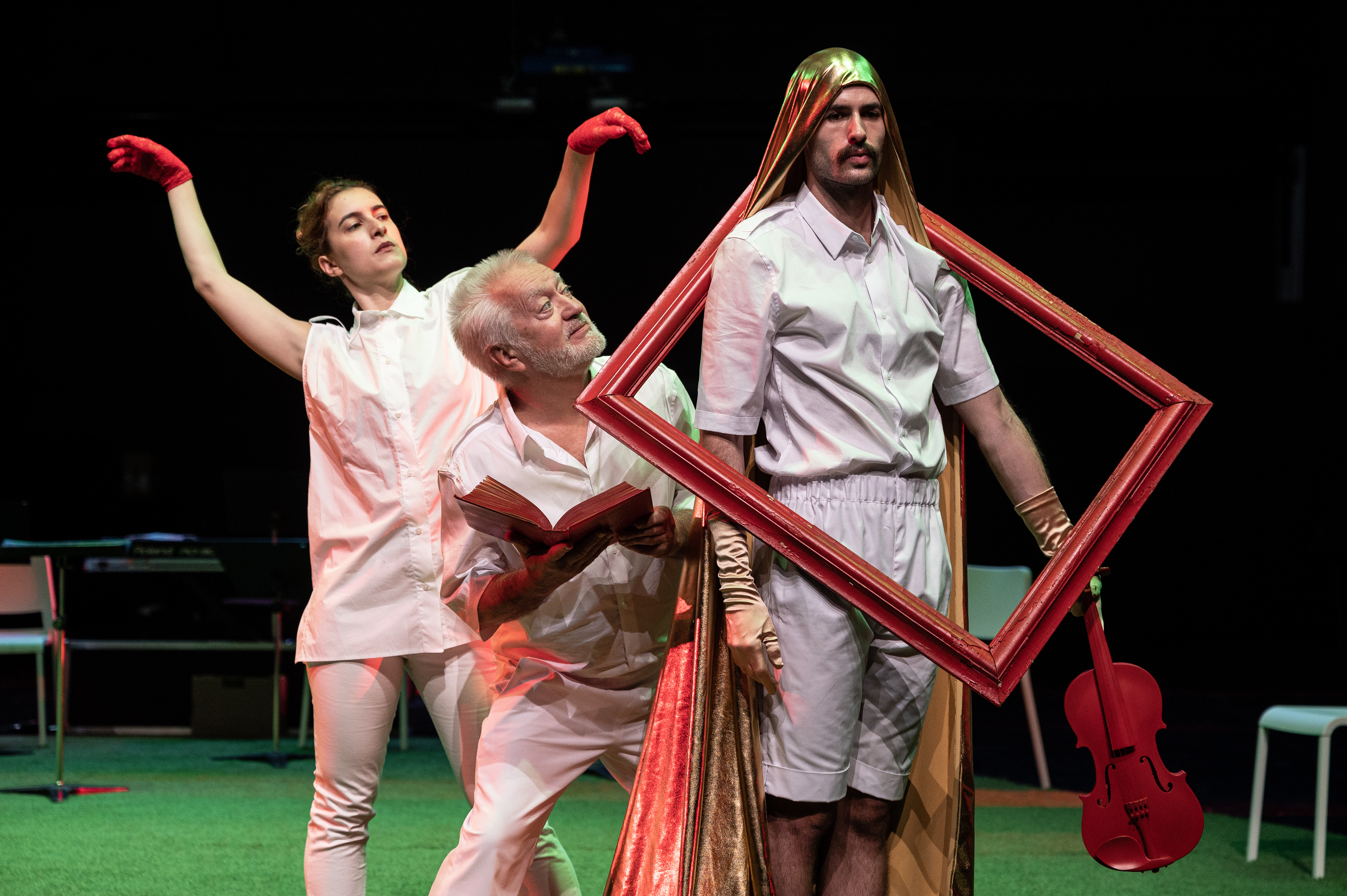
A História de um Soldado
A peça A História do Soldado resulta da colaboração do compositor Igor Stravinsky com o escritor suíço C. F. Ramuz durante o período da Primeira Grande Guerra, em 1918. A história é contada por três atores, um grupo de bailarinos e uma banda de sete
músicos. Musicalmente, A História do Soldado ocupa um lugar importante na produção de Stravinsky, e na história da música do século XX em geral. Um soldado de regresso à terra em licença de quinze dias, pára para descansar e toca
o seu pequeno violino. É interrompido pelo Diabo, disfarçado de velho, que o convence a dar-lhe o violino em troca de um livro mágico que prevê o futuro. O Diabo convida o soldado a ir para casa com ele por três dias para o ensinar a tocar. Quando o
soldado finalmente chega à sua aldeia, encontra a namorada casada com outro e toda a gente que o vê, até mesmo a sua mãe, pensa que ele é um fantasma. Percebe que tinha sido enganado – “não foram três dias, foram três anos” – e fica desesperado.
Nem mesmo a vasta fortuna que acumulara o consegue animar. Quando o Diabo, desta vez disfarçado de velha, lhe oferece o violino de volta, ele não consegue extrair qualquer som do instrumento. Desgostoso, deita-o fora, rasga o livro e resolve partir.
Até que chega a outro país, onde vive um Rei, que tem uma filha presa numa estranha melancolia. O Rei decretara que qualquer homem que a conseguisse curar poderia tomar a sua mão em casamento. O soldado decide tentar a sua sorte, e dirige-se audaciosamente para o palácio. Aí encontra um concorrente: o Diabo, disfarçado de violinista virtuoso. Mas consegue vencê-lo num jogo de carta e perdendo, propositadamente, toda a sua fortuna ganha de forma desonesta. Então descobre que
consegue tocar novamente o violino e, melhor ainda, o som da sua música reanima a Princesa. O Diabo, finalmente na sua figura, tenta intervir, mas é forçado a dançar ao som do violino até cair exausto. O Soldado e a Princesa estão alegremente unidos, mas o Diabo jura vingança.
músicos. Musicalmente, A História do Soldado ocupa um lugar importante na produção de Stravinsky, e na história da música do século XX em geral. Um soldado de regresso à terra em licença de quinze dias, pára para descansar e toca
o seu pequeno violino. É interrompido pelo Diabo, disfarçado de velho, que o convence a dar-lhe o violino em troca de um livro mágico que prevê o futuro. O Diabo convida o soldado a ir para casa com ele por três dias para o ensinar a tocar. Quando o
soldado finalmente chega à sua aldeia, encontra a namorada casada com outro e toda a gente que o vê, até mesmo a sua mãe, pensa que ele é um fantasma. Percebe que tinha sido enganado – “não foram três dias, foram três anos” – e fica desesperado.
Nem mesmo a vasta fortuna que acumulara o consegue animar. Quando o Diabo, desta vez disfarçado de velha, lhe oferece o violino de volta, ele não consegue extrair qualquer som do instrumento. Desgostoso, deita-o fora, rasga o livro e resolve partir.
Até que chega a outro país, onde vive um Rei, que tem uma filha presa numa estranha melancolia. O Rei decretara que qualquer homem que a conseguisse curar poderia tomar a sua mão em casamento. O soldado decide tentar a sua sorte, e dirige-se audaciosamente para o palácio. Aí encontra um concorrente: o Diabo, disfarçado de violinista virtuoso. Mas consegue vencê-lo num jogo de carta e perdendo, propositadamente, toda a sua fortuna ganha de forma desonesta. Então descobre que
consegue tocar novamente o violino e, melhor ainda, o som da sua música reanima a Princesa. O Diabo, finalmente na sua figura, tenta intervir, mas é forçado a dançar ao som do violino até cair exausto. O Soldado e a Princesa estão alegremente unidos, mas o Diabo jura vingança.